





Scope
- 8,100 sq. ft. 3/8” Plywood installed over existing substrate
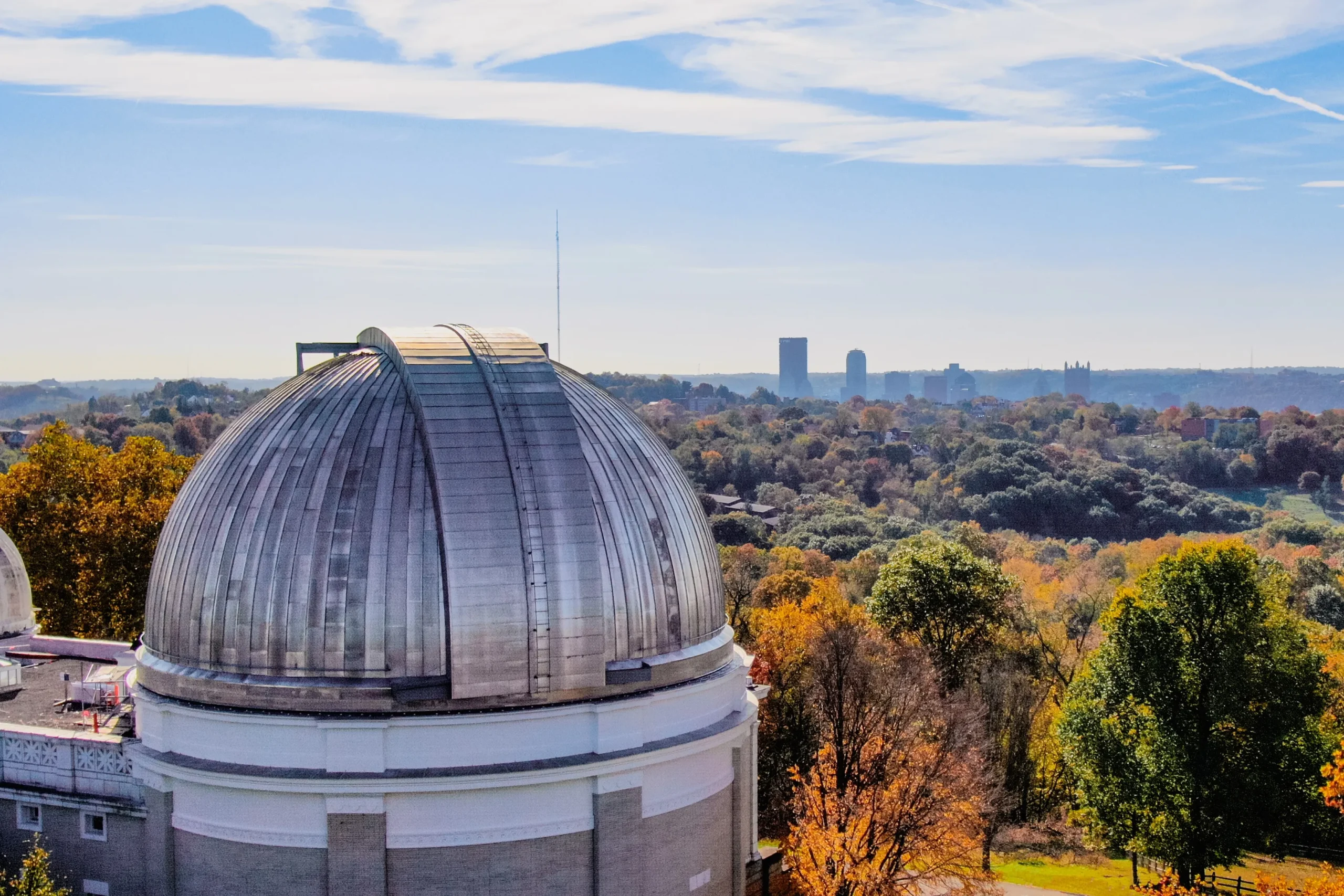
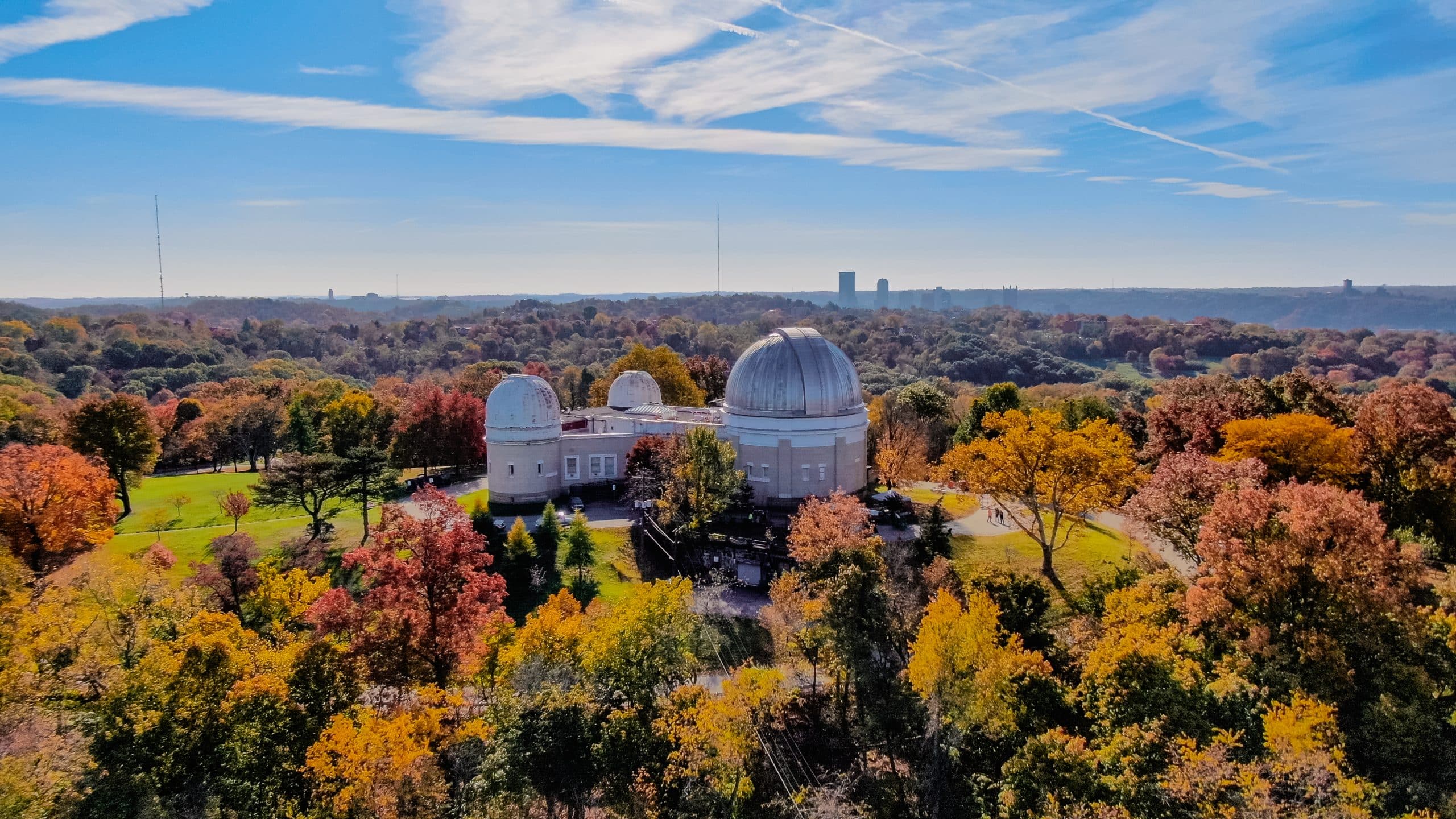
- 7,000 sq. ft. Tapered and Curved Standing Seam Freedom Gray Copper Roofing
- 1,100 sq. ft. Freedom Gray Copper Flat Lock Panels
- 500 sq. ft. Fully Soldered
- 440 Lineal Feet Segmented and Fully Soldered Cornice Flashing
Property Location
Pittsburgh, PA
Case Study: Allegheny Observatory Roof Restoration Project
Historical Significance
Established in 1859 by 32 astronomy enthusiasts from Allegheny City as the Allegheny Telescope Association, the Allegheny Observatory has long been recognized as a distinguished center for astronomical research and public education. In May 1867, the observatory became affiliated with the Western University of Pennsylvania, now known as the University of Pittsburgh.
In 1912, the observatory was relocated to its current site in Riverview Park, just north of downtown Pittsburgh. Following its integration with the University of Pittsburgh, the institution developed a strong emphasis on scientific research, earning international recognition for its pioneering work in astrometric parallax measurements that helped establish standards for determining stellar distances. Its findings served as reference benchmarks for observatories worldwide.
The facility houses several notable instruments, including the 30-inch Thaw Refractor, the 13-inch Fitz-Clark Refractor, and a modern 16-inch Meade telescope. While these telescopes historically supported groundbreaking research, they now primarily serve instructional purposes, public outreach initiatives, and academic programs such as STEPUP, led by Professor Wood-Vasey.
The observatory’s resources also include more than 110,000 astrometric plates, an all-sky weather camera, a seismograph, and a NASA meteor-tracking camera. Public engagement remains central to its mission, with regular telescope viewings and the Allegheny Observatory Lecture Series held monthly from January through November, featuring presentations by regional scientists.
Project Scope
The project involved the replacement of approximately 8,100 square feet of roofing system components, including:
- Substrate plywood decking
- Ice and Water Shield (CCW WIP 300 HT)
- Freedom Gray Revere tin-zinc copper-coated roof panels
Project Overview
From the outset, this was not a conventional roof replacement. The existing roof system featured individually fabricated panels secured by a combination of hooks and clips, reflecting the custom nature of the original design. The removal process required meticulous attention and specialized techniques to carefully disengage each panel while preserving the structural integrity of the underlying roof system.
Once the panels were removed, the team undertook the systematic replacement of each individual substrate plywood board. The original construction incorporated distinct, separately installed boards, necessitating precise measurement and installation to ensure compatibility with the historic structure and adherence to its unique configuration.
During the installation phase, work began at the roof deck with the application of the CCW WIP 300 HT Ice and Water Shield, providing a high-performance moisture barrier. The selected Freedom Gray Revere panels were chosen to maintain the historic copper aesthetic while delivering enhanced durability and weather resistance. In addition to their performance characteristics, the panels support environmentally responsible building practices through material longevity and sustainable composition.
In total, 8,100 square feet of specialized metal roofing was installed, improving both the structural performance and visual integrity of the observatory while respecting its architectural heritage.
Safety and Quality Assurance
Throughout the duration of the project, strict safety protocols were implemented and continuously monitored. Regular reviews ensured compliance with industry standards and best practices, resulting in a safe and incident-free execution of both removal and installation operations.
Conclusion
This restoration project exemplifies the successful integration of historic preservation, technical precision, and sustainable construction practices. The complexity of the roof system, combined with the need to maintain architectural authenticity, required a high level of craftsmanship and coordination.
The completed work not only safeguards a landmark scientific institution but also reflects the quality, innovation, and professional excellence emblematic of Gold Circle Award–level achievement.
Looking for roofing solutions for your business?
Let’s Make it happen.
"*" indicates required fields